
More Than a Rainbow: Finding Truly Inclusive Mental Health Care
- Elly the social worker
- Mar 12
- 5 min read

Let’s be real for a second: seeing a rainbow sticker on a clinic door or a tiny pride flag in a social media bio feels nice. It’s a signal, a "hey, you’re welcome here." But if you’re part of the LGBTQ+ community, you probably know that a sticker is just the bare minimum. It’s like a restaurant putting a "Vegetarian Friendly" sign out front, only for you to find out the only option is a side of limp iceberg lettuce.
When it comes to your mental health, "limp lettuce" care isn't going to cut it. You deserve, and quite frankly, require, care that goes deeper than surface-level symbols. You need affirming care.
But what does that actually mean? Is it just a buzzword, or is there a tangible difference in how therapy feels when it’s truly inclusive? At Talk to Heal Counseling Center, I believe inclusive care is an active, ongoing practice, not a static badge of honor. It’s about creating a space where you don’t have to spend half your session (and your hard-earned money) educating your therapist on your identity.
If you’re living in Georgia and looking for a place where your whole self is invited into the room, give us a call at 404-369-3838. Just a heads-up: because of licensing and our commitment to our local community, we only provide services for people living right here in the Peach State.
Affirming Care: More Than Just "Being Nice"
I’ve heard so many stories from clients who went to a "friendly" therapist, only to be met with blank stares when they mentioned specific community dynamics or, worse, faced "micro-aggressions" disguised as curiosity. Affirming care isn't just about being a "nice" person. It’s a clinical standard.
In practice, affirming care means your therapist has done the work. I make it a priority to understand the nuance of LGBTQ+ lives without making the client the teacher. It means I understand that your identity isn't a "problem" to be solved or a "phase" to be analyzed. It’s a fundamental part of who you are, and it influences how you move through the world, how you experience stress, and how you heal.

The Power of Language (And Why It Matters)
Language is the first handshake in therapy. If a therapist stumbles over your pronouns, uses your deadname, or relies on outdated, gendered assumptions, the "safety" of the room evaporates instantly.
Truly inclusive care starts with the paperwork. Have you ever filled out an intake form that only gave you "Male" or "Female" as options? It feels like being erased before you even walk in the door. At Talk to Heal, I want our intake process to reflect the diversity of the people I serve.
But it goes beyond the forms. It’s about the language used in the room. It’s about me following your lead on how you describe your relationships, your body, and your identity. If you use the word "queer" to describe yourself, I won't flinch. If you talk about your "chosen family," I understand the weight and importance of those bonds. Respectful language isn't about being "politically correct", it's about being accurate and honoring your reality.
Navigating Unique Stressors: It’s Not Just "Regular" Anxiety
Let’s talk about "Minority Stress." This is a very real clinical concept that describes the chronic stress faced by members of stigmatized groups. If you’re coming to me for anxiety, I need to know if that anxiety is coming from a chemical imbalance, a stressful job, or the fact that you have to navigate a world that isn't always kind to your identity.
In Georgia, we have our own unique blend of Southern hospitality and, unfortunately, Southern hostility. Navigating family reunions in rural GA, workplace dynamics in Atlanta, or religious environments anywhere in the state can add layers of complexity to your mental health.
When I work with LGBTQ+ clients, I’m looking at the whole picture:
Coming Out (or not): The ongoing process and the safety considerations involved.
Family Dynamics: Navigating rejection, setting boundaries, or celebrating reconciliation.
Gender Dysphoria vs. General Insecurity: Distinguishing between the two and providing targeted support.
Systemic Barriers: Dealing with healthcare, legal systems, and societal bias.
I’m here to help you navigate these stressors with a strengths-based approach. You aren’t "broken" because you’re stressed; you’re likely reacting to a stressful environment. My goal is to empower you to build resilience while validating that, yeah, things can be tough out there.
Clinical Competence: The Homework Is on Us
I mentioned earlier that you shouldn't have to be your therapist’s teacher. While every individual’s experience is unique, a therapist claiming to be inclusive should have a solid foundation in LGBTQ+ issues.
This means I stay up-to-date on the latest research, the changing terminology, and the specific mental health challenges that disproportionately affect the community. Whether we’re using CBT (Cognitive Behavioral Therapy) to manage intrusive thoughts or DBT (Dialectical Behavior Therapy) for emotional regulation, I tailor those modalities to fit your life.
For example, if we’re working on "assertiveness training," we have to account for the fact that being "assertive" as a trans woman of color carries different risks than it does for a cisgender man. Clinical expertise without social context is just half-baked therapy.
Creating a "Soft Landing" in Georgia
Living in the South, finding a therapist who "gets it" can sometimes feel like searching for a needle in a haystack. But here’s the good news: you’ve found a place that prioritizes you. Talk to Heal Counseling Center is designed to be a soft landing.
I want you to feel that the second you see our website or hear my voice on the phone. We aren't here to judge, to "fix," or to steer you toward a version of yourself that makes other people comfortable. We are here to support your journey toward healing, whatever that looks like for you.

Whether you're in the heart of Atlanta, the suburbs of Savannah, or a small town in North Georgia, our telehealth and in-person options ensure that you have access to the care you deserve. Remember, we are strictly for our Georgia neighbors: keeping it local means I understand the specific culture and challenges of our state.
What to Look for in an Inclusive Therapist
If you’re still shopping around (which is totally okay: finding the right "click" with a therapist is vital!), here are a few "Green Flags" to look for:
They list their pronouns: It shows they understand that gender isn't something to be assumed.
They mention specific training: Look for continuing education in LGBTQ+ affirmative care.
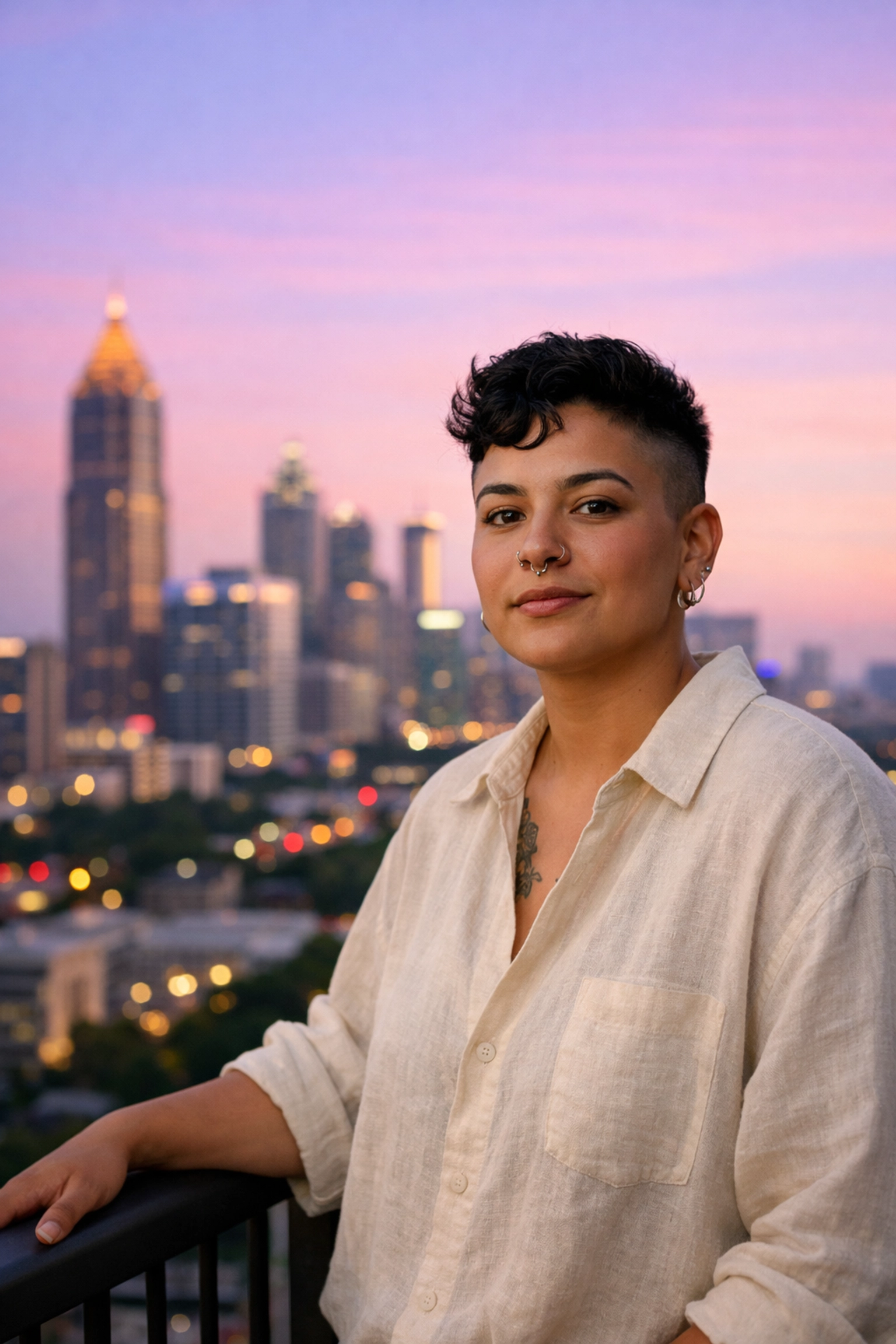
Their website uses inclusive imagery: Do the photos look like the real world, or just one specific demographic?
They handle mistakes with grace: If they trip up on a term, do they apologize sincerely and move on, or do they make it "your" problem to comfort them?
At the end of the day, you are the expert on your own life. My job is to be the expert on the tools that can help you live that life more fully.

Ready to Start?
If you’re tired of the "rainbow washing" and ready for therapy that actually sees you, I’m here. Finding a therapist is a big step, and I want to make it as low-friction as possible. You don't need to have a "crisis" to start therapy; you just need a desire to feel a little bit better, a little more grounded, and a lot more like yourself.
You can learn more about our team or check out our full range of services.
Let’s move past the stickers and get to the real work of healing. You’ve got this, and I’ve got you.
Give us a call at 404-369-3838.Note: Talk to Heal Counseling Center provides services exclusively to residents of the State of Georgia.

Whether you are navigating identity, dealing with the winter blues, or just need a safe space to vent about the absurdity of life, we are here to listen. Let’s talk. Let’s heal. Let’s get started today.
Comments